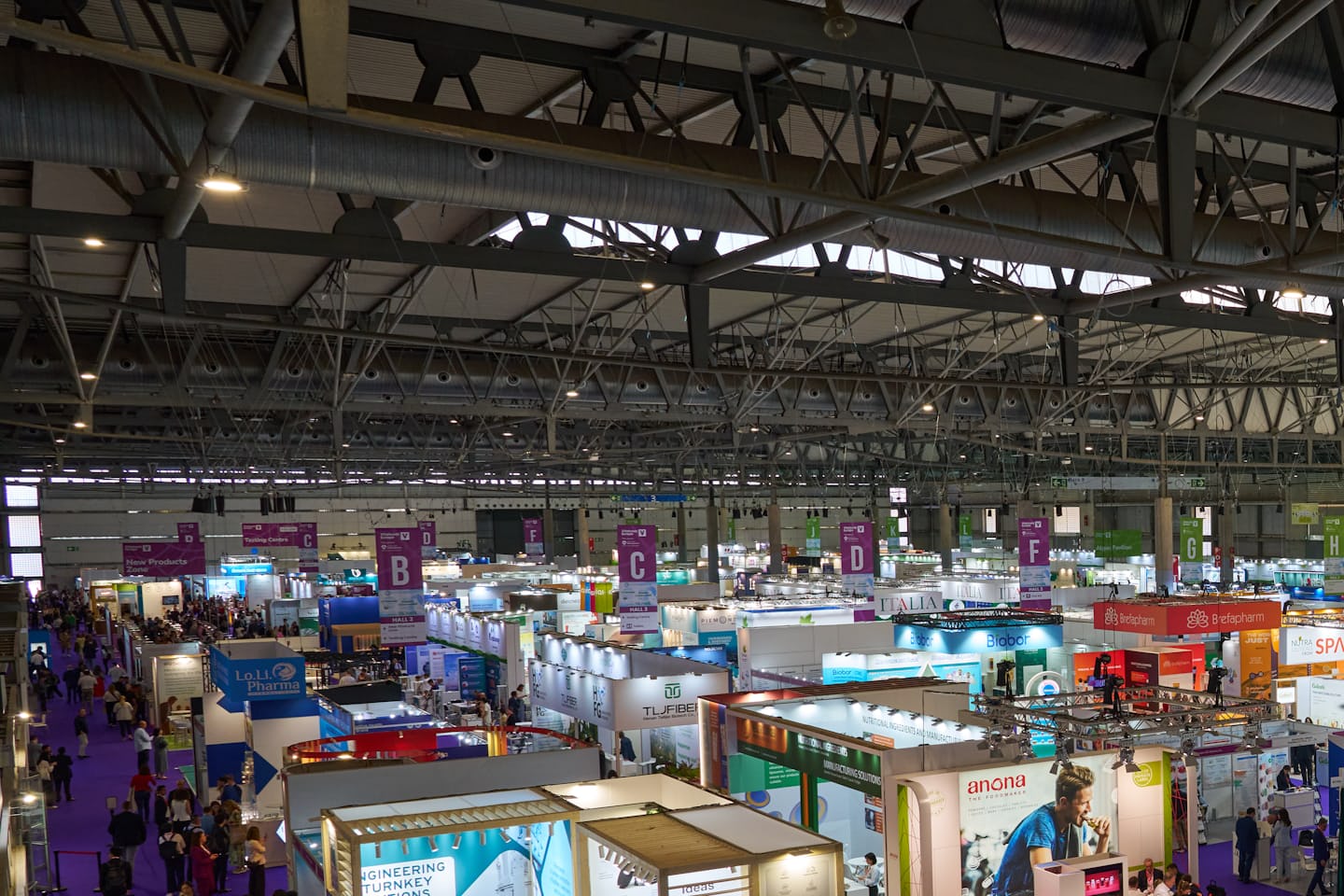
Twice a year the industry gathers in a hall the size of a small airport and walks. Aisles of booths, category by category, a field of names condensed into one building. For a buyer it is the most efficient week in the calendar: the physical truth of a hundred products in a day, the weight of the glass, the smell, the founder answering questions with no screen between you. Nothing the desk does replaces that, and nothing here argues it should.
But be precise about what a booth is. A booth is bought months in advance. It means the brand had the cash and the confidence to commit to a stand, produce trade materials, price an offer and staff a week. By the time a name is standing on a fair floor it has production capacity, a price list, usually a distributor conversation already running, and often a PR firm shaping the story you are about to be told. Every one of those is a good sign. Every one of them is also evidence that you are not early.
The window that matters closes faster than the fair calendar turns. In the categories the desk reads, the gap between a brand's first real surge and its first retail shelf conversation runs weeks, not seasons. The buyers who get the interesting terms are the ones in the founder's inbox during the first weeks of the first surge, while the story is still unmanaged and the calendar is still empty. A fair floor cannot put you there. It is a schedule, and windows do not keep schedules.
This is the specific thing the desk is built to move: when you first hear the name. A new name earns a flag within days of its first mentions, then serves a probation, watched for roughly two weeks before it earns a full score, and labeled an early signal and nothing more while the data is thin. Most flagged names go nowhere, and the board says so plainly. But the ones that go somewhere surface while the founder still answers their own email.
So the two instruments compose. The board is for being surprised early, in private, months before the industry gathers. The floor is for confirming with your hands what the signal said at a distance: walk in with a short list you have been watching for a season, spend your aisle hours on those booths, and let the rest of the hall be a backdrop. The fair is the right place to close a discovery. It is the wrong place to make one.
The desk will keep reading the field between the fairs, which is where the field actually moves. The method is public. Bring the list, and enjoy the hall.